Case StudyClearing AI
Turning repetitive typing into intelligent, context-aware responses for clinicians.
Clinicians were losing valuable time typing the same responses repeatedly. We built an intelligent AI-assisted system that dramatically reduced this burden while maintaining accuracy and personalization.
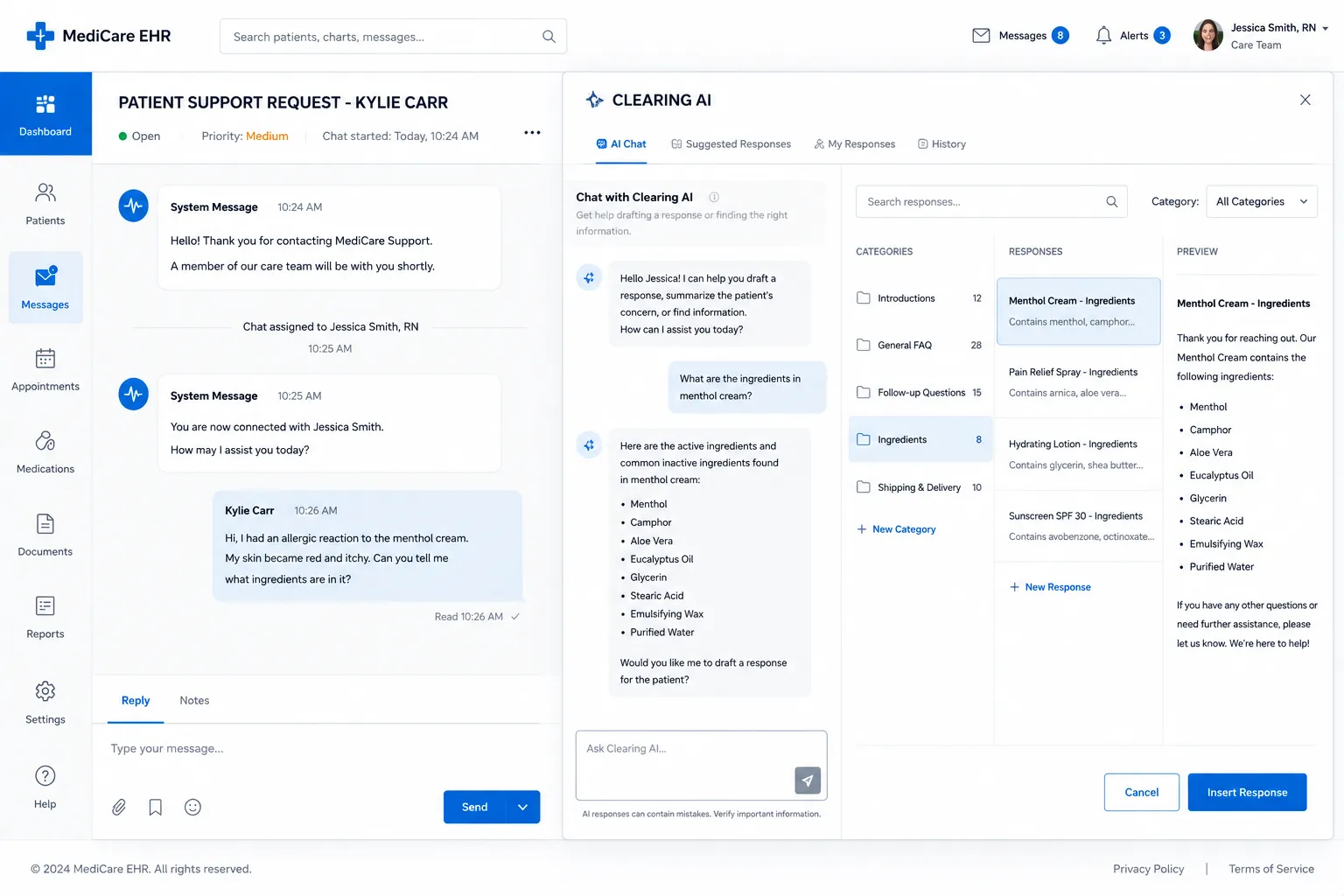
Overview
Creating a smarter way for clinicians to communicate with patients — saving time and ensuring consistency.
Led the end-to-end design and technical product management of an intelligent response system for a medical EHR platform. The goal was to eliminate repetitive typing for clinicians, improve consistency of patient communication, and free up valuable time for actual patient care.
The Challenge
Clinicians were spending a significant portion of their time repeatedly typing the same information into patient messages — introductions, common answers to patient questions, follow-up instructions, and lists of ingredients for prescriptions. This inefficiency was frustrating, increased the risk of inconsistency across practitioners, and took time away from higher-value clinical work.
My Approach
I led this feature from discovery through delivery. Rather than implementing simple static canned responses, I proposed and designed a dynamic, intelligent system using RAG (Retrieval-Augmented Generation) LLM combined with a practice-specific knowledge base and previous clinician responses.
This approach allowed the system to generate context-aware draft replies in real time while pulling accurate data from existing tables (clinician profiles, SKUs, etc.).
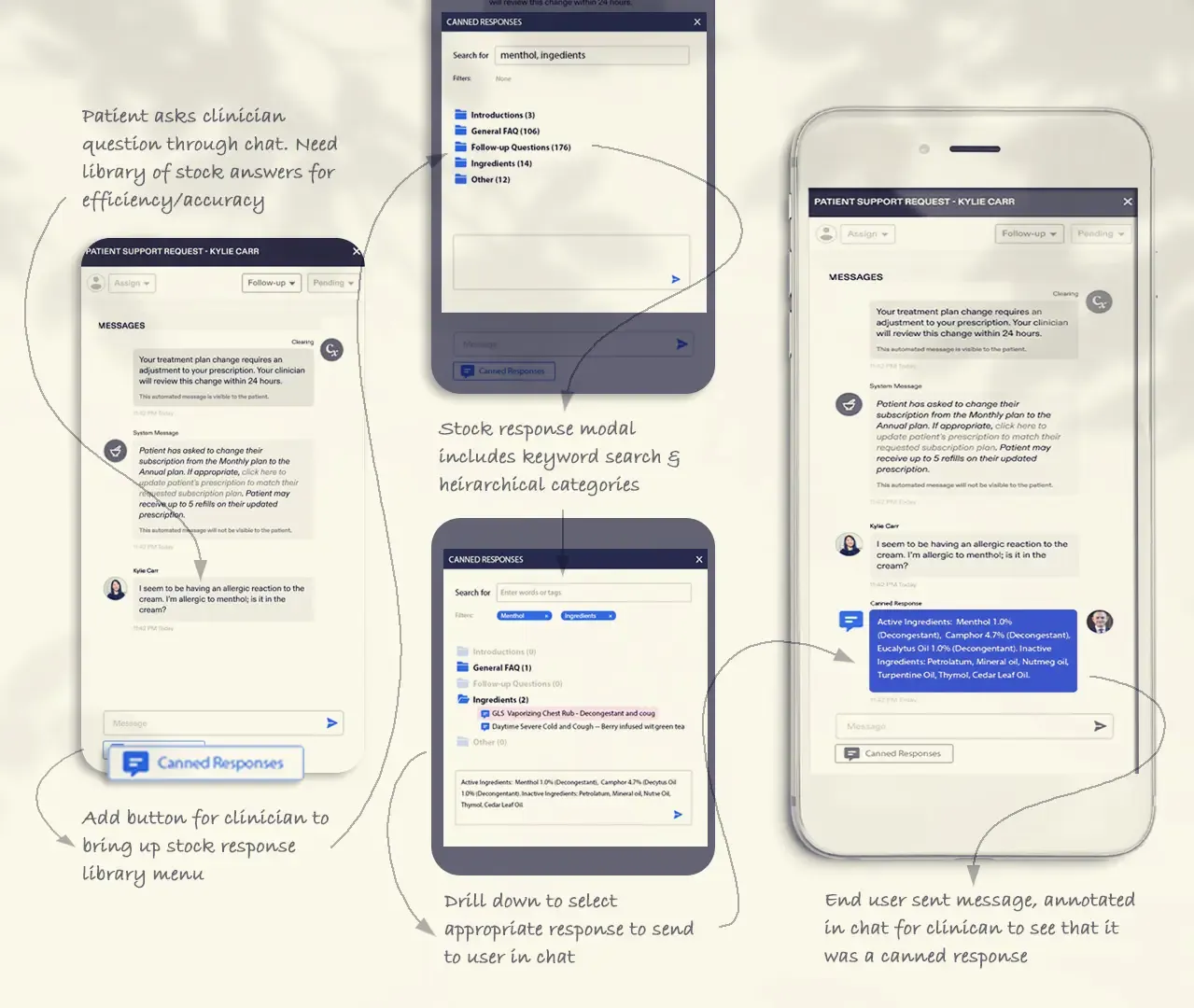
Discovery & Research
I started by surveying clinicians and holding detailed interviews to map their current workflows. I gathered examples of the documents they were copying from and identified the most common repeated inputs:
- Clinician introductions
- Answers to common patient questions
- Follow-up questions
- Prescription ingredient information
I also explored how similar problems are solved in other messaging systems and evaluated technical feasibility with engineering.
Define MVP Scope
I defined a clear MVP focused on delivering immediate value while designing for future scalability. The core feature was a smart predefined + AI-augmented response system with:
- Category-based organization
- Powerful search and filtering
- Dynamic keyword replacement from live data
Easy preview, edit, and send workflow
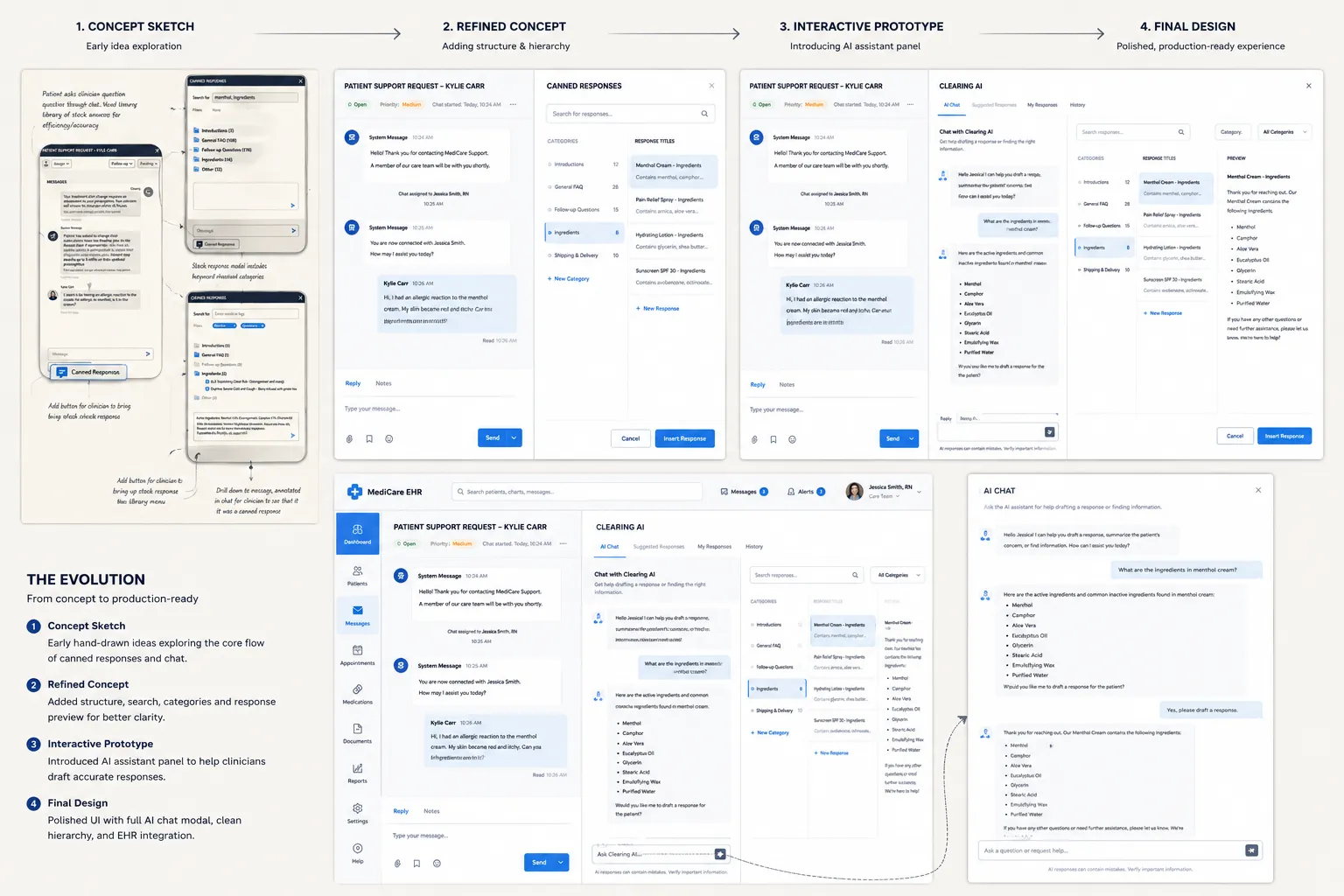
Design Decisions
I designed a clean “Smart Replies” modal that appears directly in the patient chat interface. Key considerations included:
- Strong visual hierarchy and count indicators for categories
- Robust search with multiple filters
- Clear labeling that AI suggestions were involved
- Easy editing so clinicians retained full control and could personalize responses
I created wireframes, user flows, and interaction designs, and worked closely with engineering to define the database structure (prompt/response pairs with taxonomy, tags, and SKU relationships).
Engineering Collaboration
I participated in daily standups, ran design reviews, and maintained close communication with both front-end and back-end teams. I helped break down features into sprint stories, reviewed tickets, and ensured the final implementation stayed true to the user experience vision.
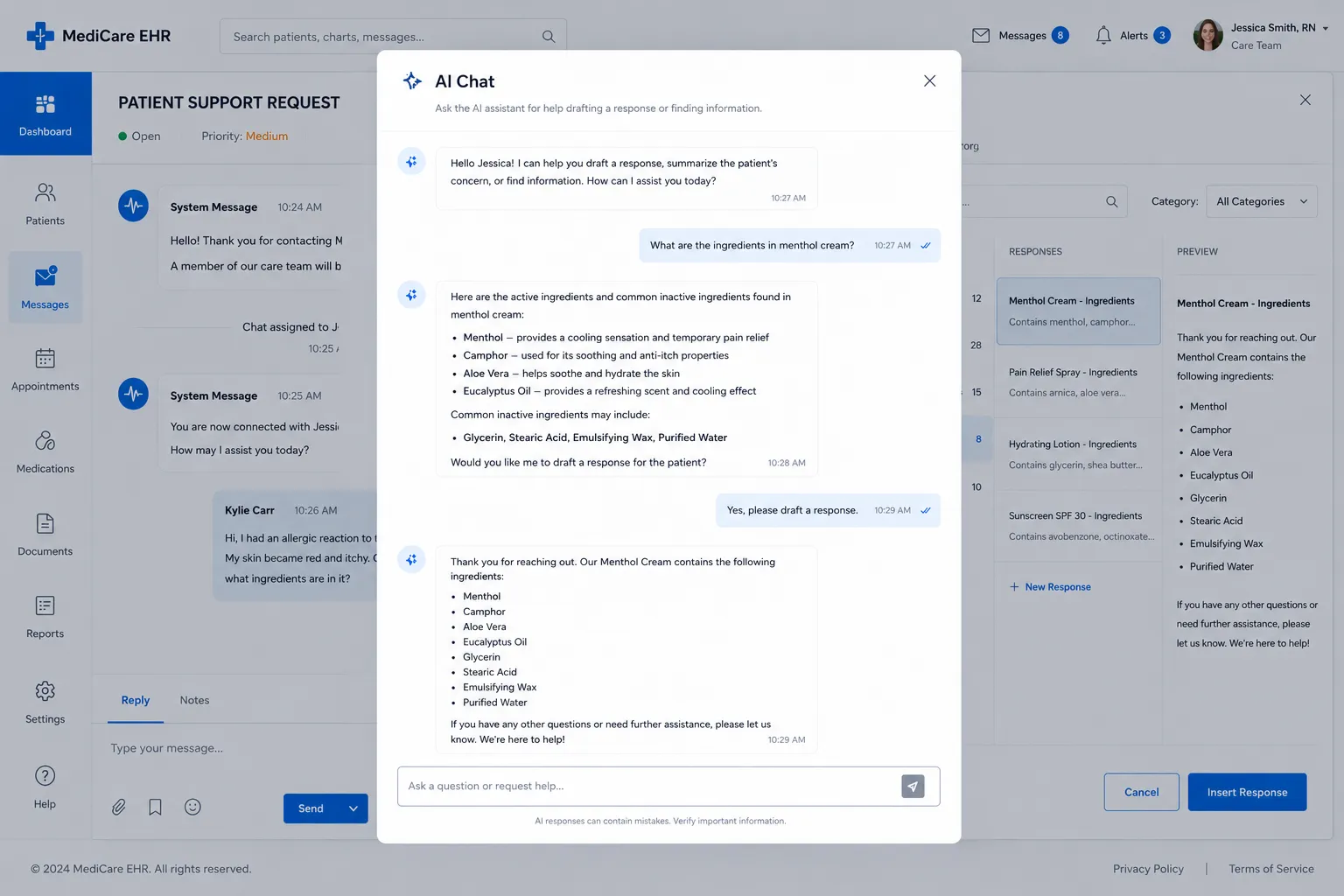
Results
- Significantly reduced time clinicians spent on repetitive typing
- Improved consistency and quality of patient communications
- Created a living knowledge base that improves over time
- High clinician adoption due to the intuitive interface and retained control
Key Takeaways
- The most effective AI tools in healthcare augment human expertise rather than replace it.
- Strong taxonomy and search design are critical when building systems that must scale with growing content.
- Close collaboration between design, engineering, and clinical users throughout the process leads to better adoption and outcomes.